


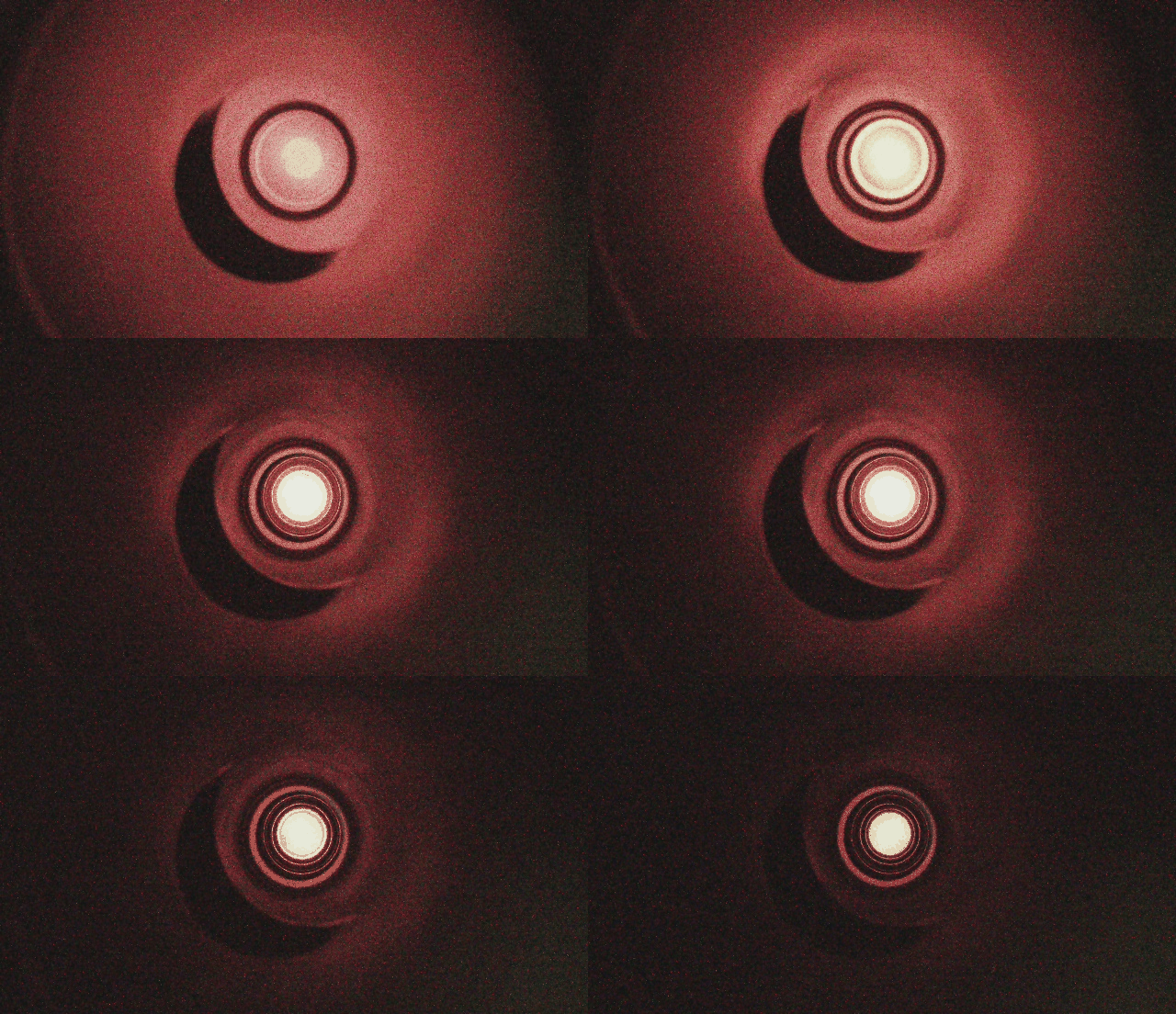
Plasma processing is a recovery technique developed to mitigate field emission in SRF elliptical cavities. Field emission could be caused by the presence of hydrocarbon contaminants present on the cavity surface, which can lead to increased radiation levels, degraded cavity performance, and limitations in the achievable accelerating gradient. The plasma process exploits a low-pressure gas mixture, usually composed of a noble gas (such as Neon or Argon) with a small percentage of oxygen. The plasma generates reactive oxygen species that interact with and remove carbon-based contaminants from the cavity surface, thereby reducing field emission sources through an increase in the niobium work function and a reduction of the secondary electron emission coefficient, without requiring cavity disassembly.
Within the PIPII framework, the collaboration between INFN LASA, CEA and FNAL has initiated an investigation into the applicability of plasma processing to LB650 cavities, representing the INFN LASA’s in-kind contribution to the project. In June, together with FNAL colleague Bianca Giaccone, we started the experimental activity on a prototype cavity. Building on the electromagnetic simulations carried out in the previous months, which supported the definition of the processing strategy, we successfully ignited the plasma in the last cell, on the pick-up side of the cavity. Subsequently, by exploiting field superposition techniques, the plasma was progressively transferred and controlled along the entire cavity length, enabling the treatment of all five cells of the LB650 structure.
These initial results demonstrate the feasibility of plasma processing in LB650 cavities, with the Fundamental Power Coupler installed, representing a significant milestone toward the implementation of this recovery technique in the LB650 Cryomodules.


